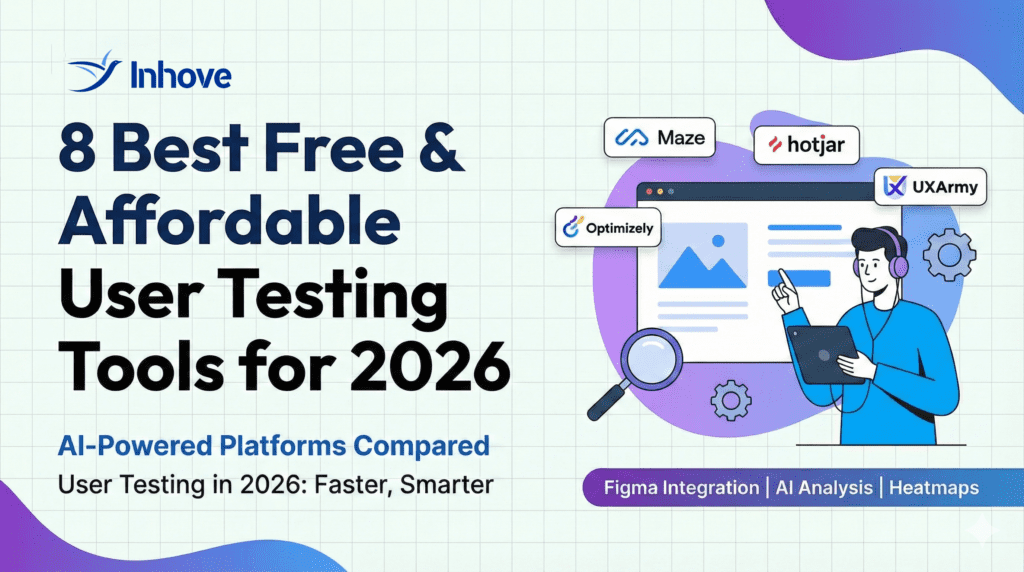
User Testing in 2026: Faster, Smarter, More Accessible
The landscape of user testing has transformed dramatically. What once required weeks of manual analysis now happens in minutes, thanks to AI-powered usability testing tools reshaping how UX professionals gather insights.
Small businesses and startups no longer face prohibitive barriers to understanding their users. Modern user testing platforms offer powerful free plans, flexible pay-per-test pricing, and AI-driven insights that previously required enterprise budgets. Whether you’re testing Figma prototypes, live websites, or mobile apps, there’s a solution that fits your workflow and budget.
This comprehensive guide explores the most effective user testing tools available in 2026, focusing on platforms that deliver professional-grade insights without breaking the bank.
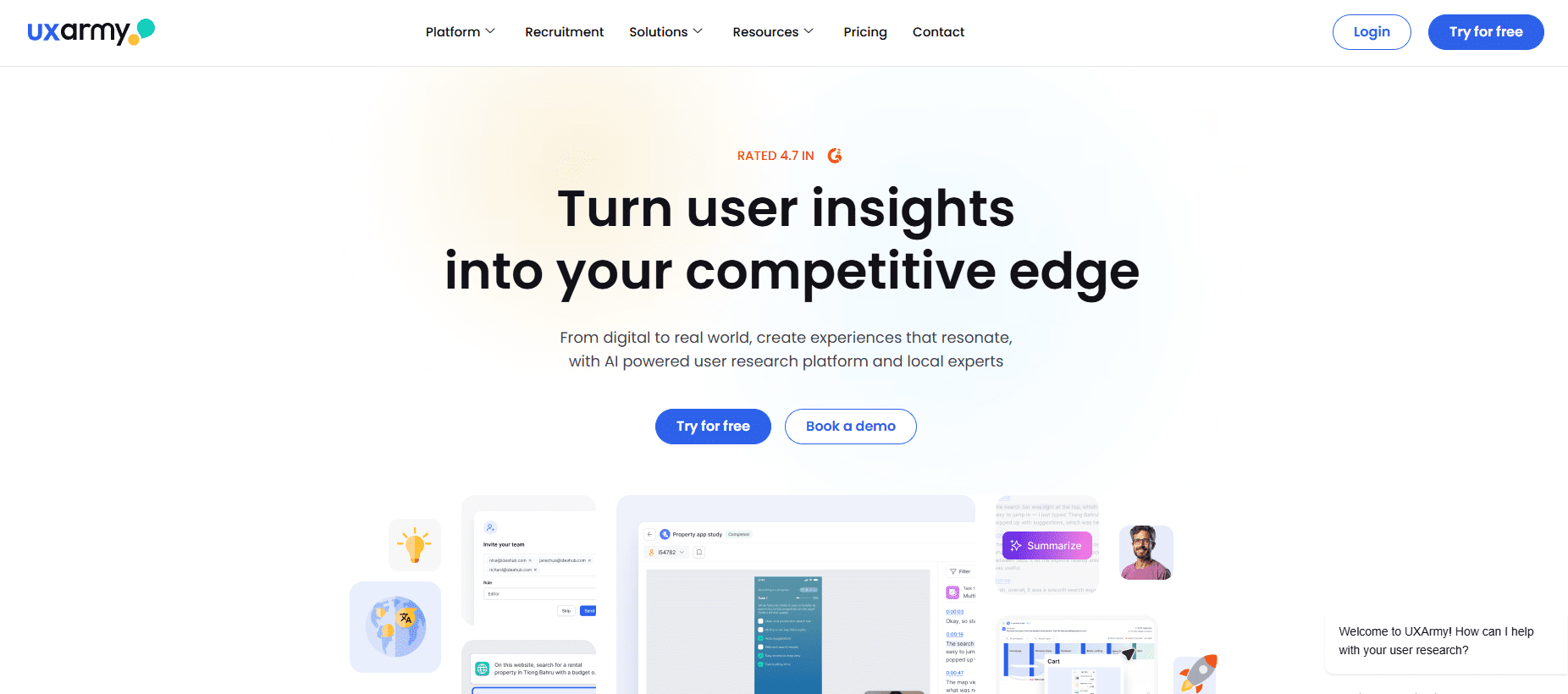
1. UXArmy: AI-Powered Mobile & Web Testing
Best for: Teams needing comprehensive moderated and unmoderated testing with AI insights
UXArmy stands out for its voice and screen recording capabilities, making it ideal for gathering rich qualitative feedback from real users testing websites and mobile apps. The platform supports testing on staging environments, TestFlight, and Google Play beta versions.
Key Features & AI Capabilities
AI-Enhanced Analysis processes video, audio, and behavioral data to surface key themes and patterns you might otherwise miss. The platform automatically generates transcripts with keyword tagging to identify recurring user concerns.
Comprehensive Testing Methods include prototype testing (with Figma, Sketch, InVision integration), live website testing, mobile app testing, card sorting, tree testing, surveys, and moderated interviews through their DeepDive® feature.
Visual Analytics provide heatmaps, navigation paths, and click tracking that reveal exactly where users encounter friction or confusion.
Global Participant Panel offers access to testers worldwide with particularly strong coverage in Asian markets, essential for businesses targeting international audiences.
Pricing Structure
UXArmy offers a unique pricing model based on the research method you choose, ranging from $49 to $99 per month. This credit-based approach makes it ideal for both startups with occasional testing needs and large organizations requiring flexible research options. Free plans and trials are available depending on the research method.
Website: uxarmy.com
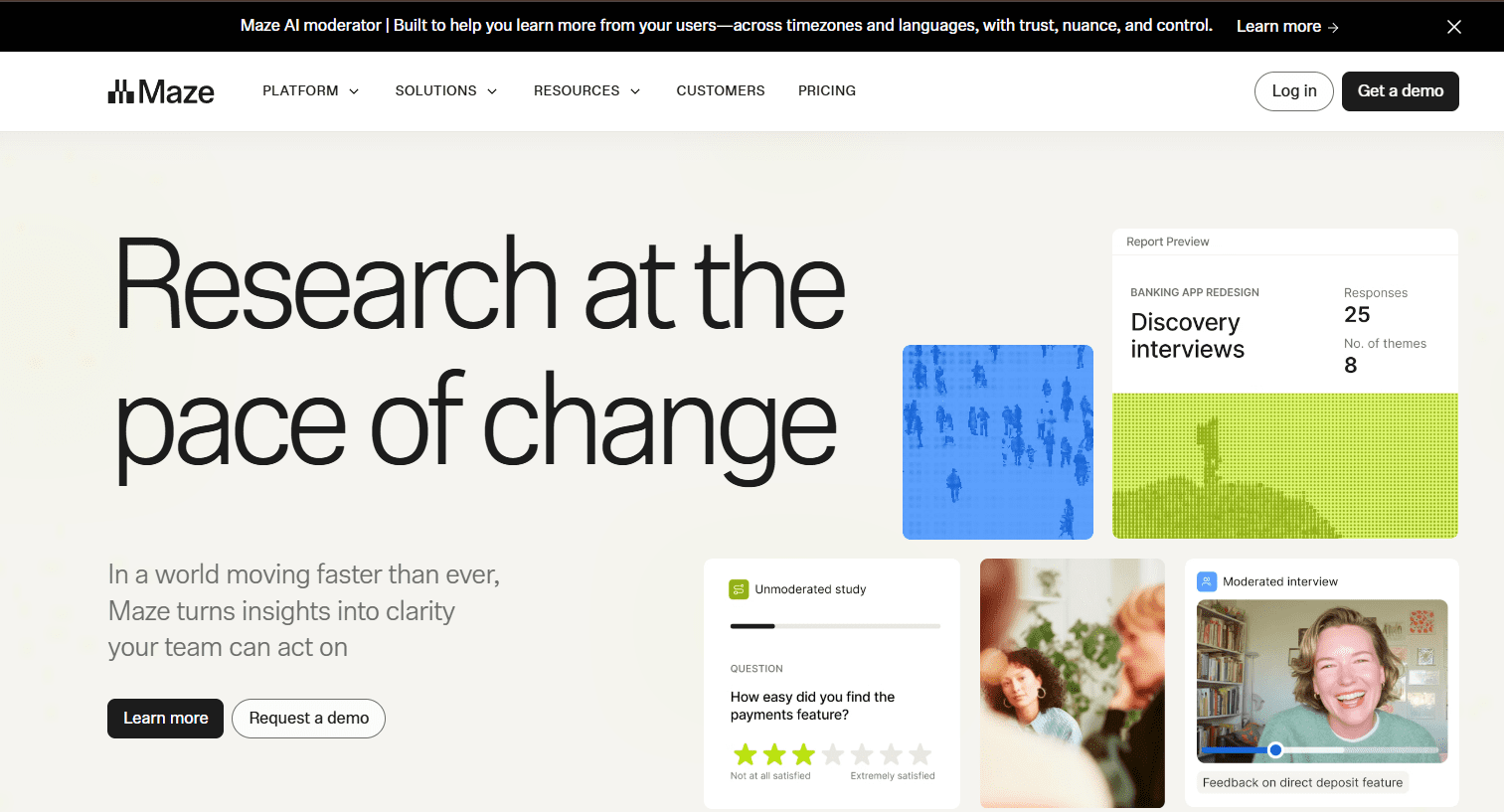
2. Maze: Rapid Prototype Testing with AI Insights
Best for: Design teams focused on quick prototype validation and early-stage feedback
Maze is an excellent choice for UX teams looking for rapid feedback on prototypes, allowing for AI-powered usability testing on designs to make data-driven decisions in early development stages.
Advanced Capabilities
Native Figma Integration allows seamless one-click prototype imports, eliminating handoff friction and keeping workflows within your design system.
AI Session Analysis identifies patterns in user interactions with prototypes or live sites, automatically highlighting drop-off points, task completion rates, and areas of confusion.
Live Website Testing enables continuous feedback gathering even after launch, helping teams identify pain points before they damage user experience.
Diverse Testing Methods support concept tests, five-second tests, preference tests, usability flows, card sorting, and tree testing—all from a single platform.
Pricing & Accessibility
Maze offers flexible pricing tiers for individuals, small teams, and enterprises. The platform is more affordable than many competitors while providing robust features. Free plans allow teams to explore core functionality before committing.
Website: maze.co
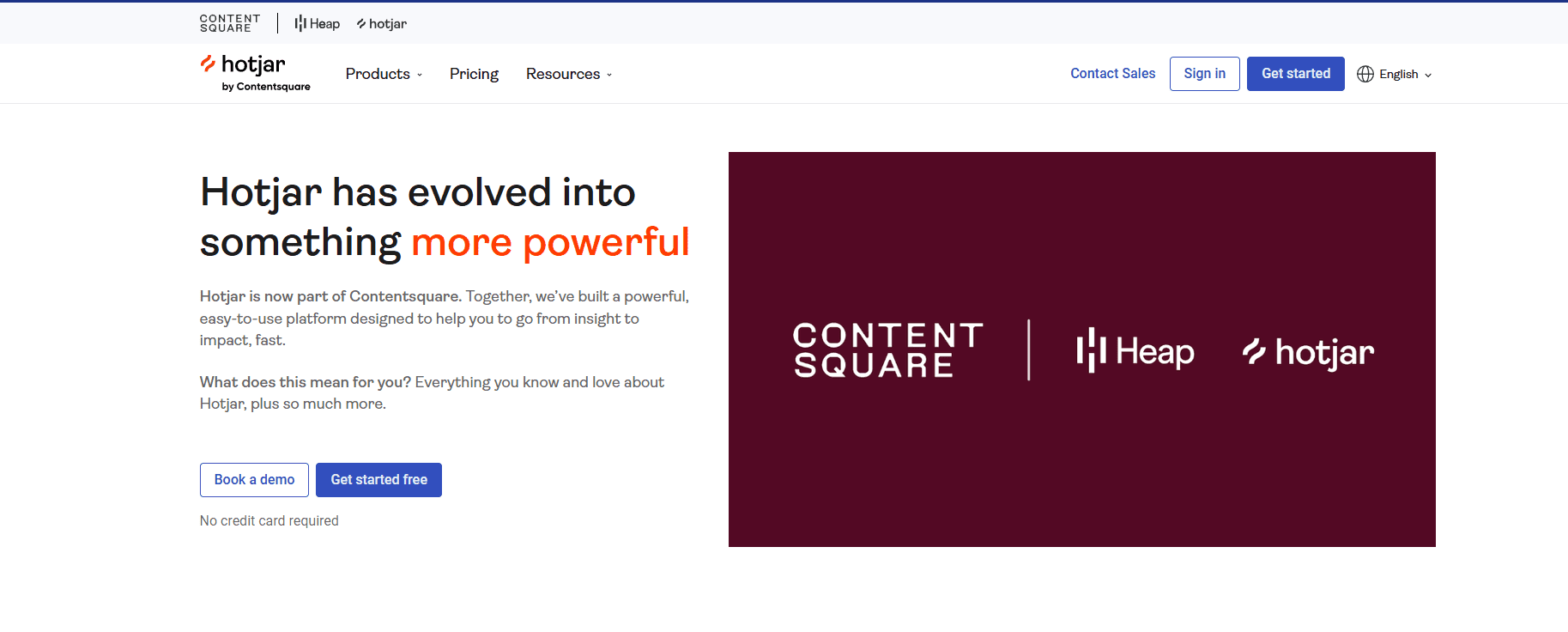
3. Hotjar: All-in-One Behavior Analytics with AI
Best for: Comprehensive website behavior analysis with automated insights
Hotjar offers a Basics plan which is free forever and gives you access to 35 daily sessions. Paid plans provide increased session limits and advanced features, starting at $39 per month for the Plus Plan, $99 per month for the Business Plan, and $213 per month for the Scale Plan.
Core Features
AI-Powered Heatmaps and Session Recordings eliminate guesswork by visualizing actual user behavior. The platform’s AI automatically generates insights from user interactions, identifying patterns that indicate confusion or success.
Conversion Funnels and Form Analytics pinpoint exactly where potential customers abandon forms or checkout processes, enabling targeted improvements that directly impact revenue.
Feedback Collection Tools including polls, surveys, and feedback widgets gather direct user input without interrupting the browsing experience.
Hotjar Sense (AI assistant) summarizes session replays in seconds, revealing key behaviors, user frustrations, and journey details across multiple sessions.
Integration Ecosystem
Seamlessly connects with Google Analytics, Mixpanel, Optimizely, Jira, Slack, HubSpot, and dozens of other tools in your tech stack.
Website: hotjar.com
4. Useberry: Figma-First Testing Platform
Best for: Designer-led research and early-stage prototype validation
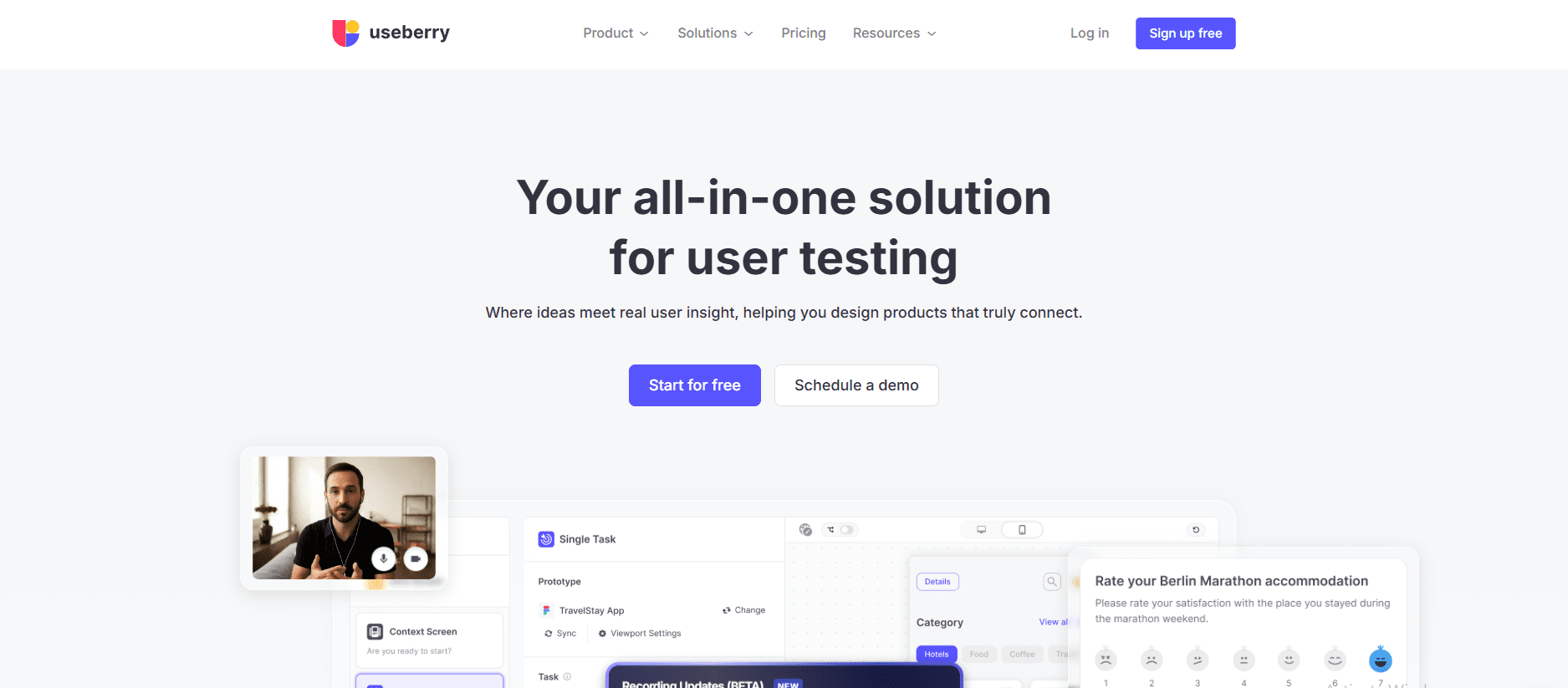
Useberry offers various features for conducting unmoderated remote studies ranging from prototype testing and website usability testing. The platform imports designs directly from Figma, ProtoPie, Sketch, and Adobe XD for immediate testing.
Testing Capabilities
Prototype Testing with user flows, click tracks, and analytics helps teams gather feedback on designs before development begins.
Multiple Test Types include five-second tests, preference tests, card sorting, tree testing, first-click tests, and task-based usability tests.
Time-on-Task Metrics and scenario-based testing validate early-stage design decisions with quantitative data.
Pricing
Free plan available with up to 10 responses per month and 1 active project. Paid plans start from $67/month with annual billing. The platform primarily targets European customers with flexible pricing for smaller teams.
Website: useberry.com
5. Lookback: Real-Time Collaborative Testing
Best for: Live user interviews and moderated testing sessions
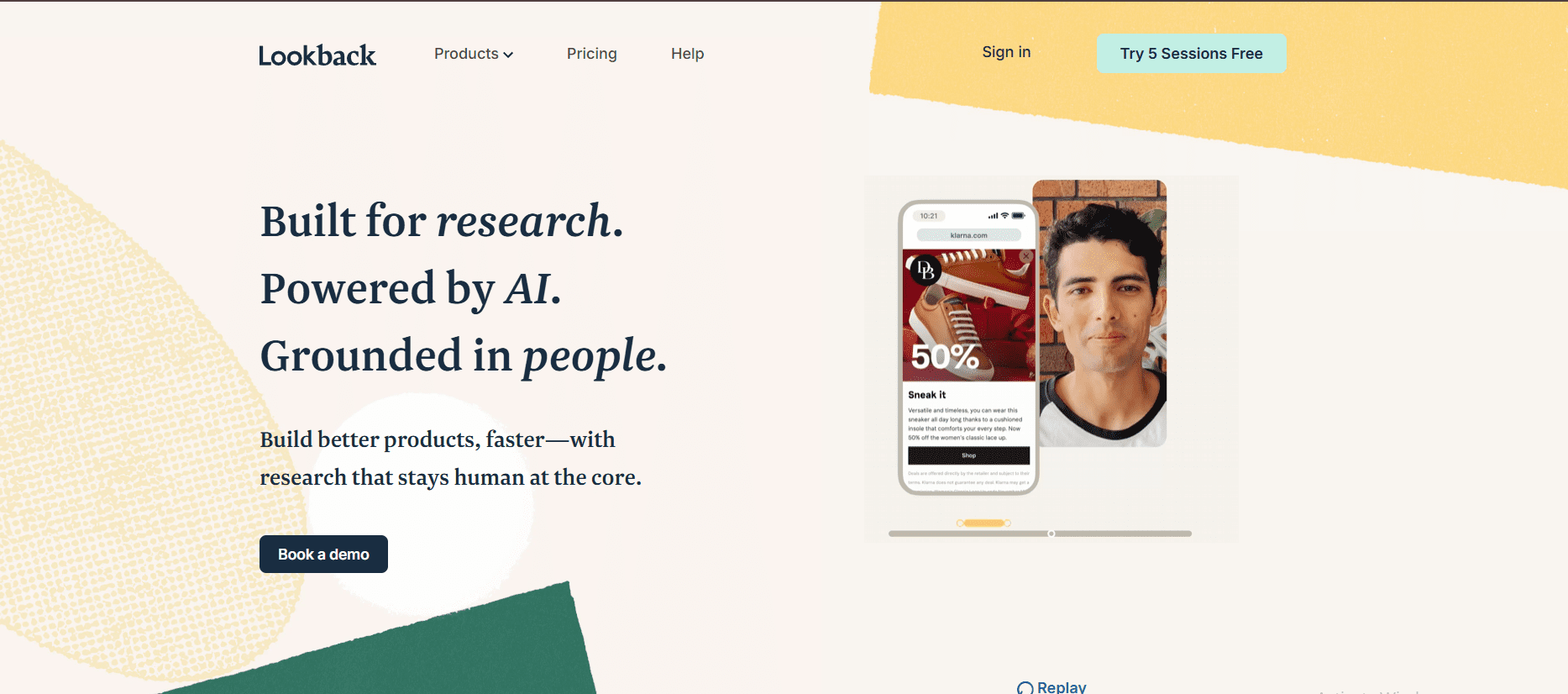
Lookback specializes in capturing both screen activity and user facial expressions during testing sessions, making it invaluable for understanding the “why” behind user behavior.
Collaboration Features
Live Testing and Recordings enable teams to conduct moderated sessions or capture unmoderated testing asynchronously. The platform records screen activity alongside user reactions using device cameras.
Real-Time Collaboration allows team members to observe sessions, leave comments, and tag colleagues without disrupting participants.
AI-Enhanced Insights through Lookback AI automatically transcribe sessions, tag keywords, and generate summaries highlighting critical usability issues.
Platform Support
Available for both iOS and Android devices, supporting native apps, mobile websites, and prototypes. Participants need only an email address to join—no account creation required.
Website: lookback.io
6. UserTesting: Enterprise-Scale AI Platform
Best for: Large teams needing diverse participant demographics and AI-powered analysis
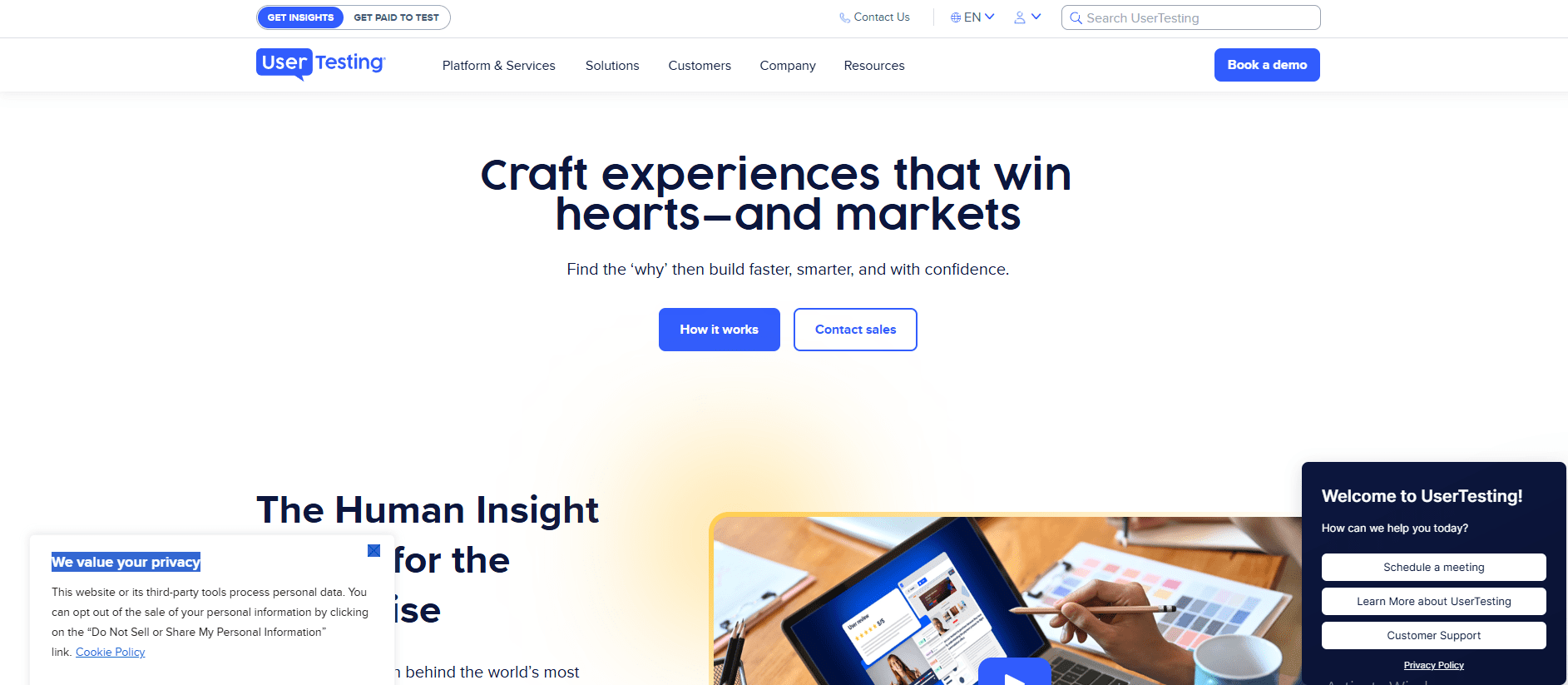
UserTesting has one of the largest participant pools on the market and offers AI-powered sentiment analysis to simplify reporting and identify repeated pain points.
AI-Powered Features
Human Insights Platform uses AI to analyze video, audio, text, and behavioral data simultaneously, surfacing patterns and themes across hundreds of sessions.
Sentiment Analysis automatically identifies moments of frustration, confusion, or delight during user sessions.
Automated Transcription and Highlighting converts hours of video feedback into searchable, tagged insights with key moments surfaced for quick review.
Testing Methods
Supports card sorting, tree testing, usability testing, prototype testing, Quick Answers for rapid feedback, and longitudinal studies to track behavior changes over time.
Pricing Consideration
Users have reported prices ranging from $1,500 to $2,500 per seat/month. While expensive, the platform delivers enterprise-grade capabilities with extensive participant access.
Website: usertesting.com
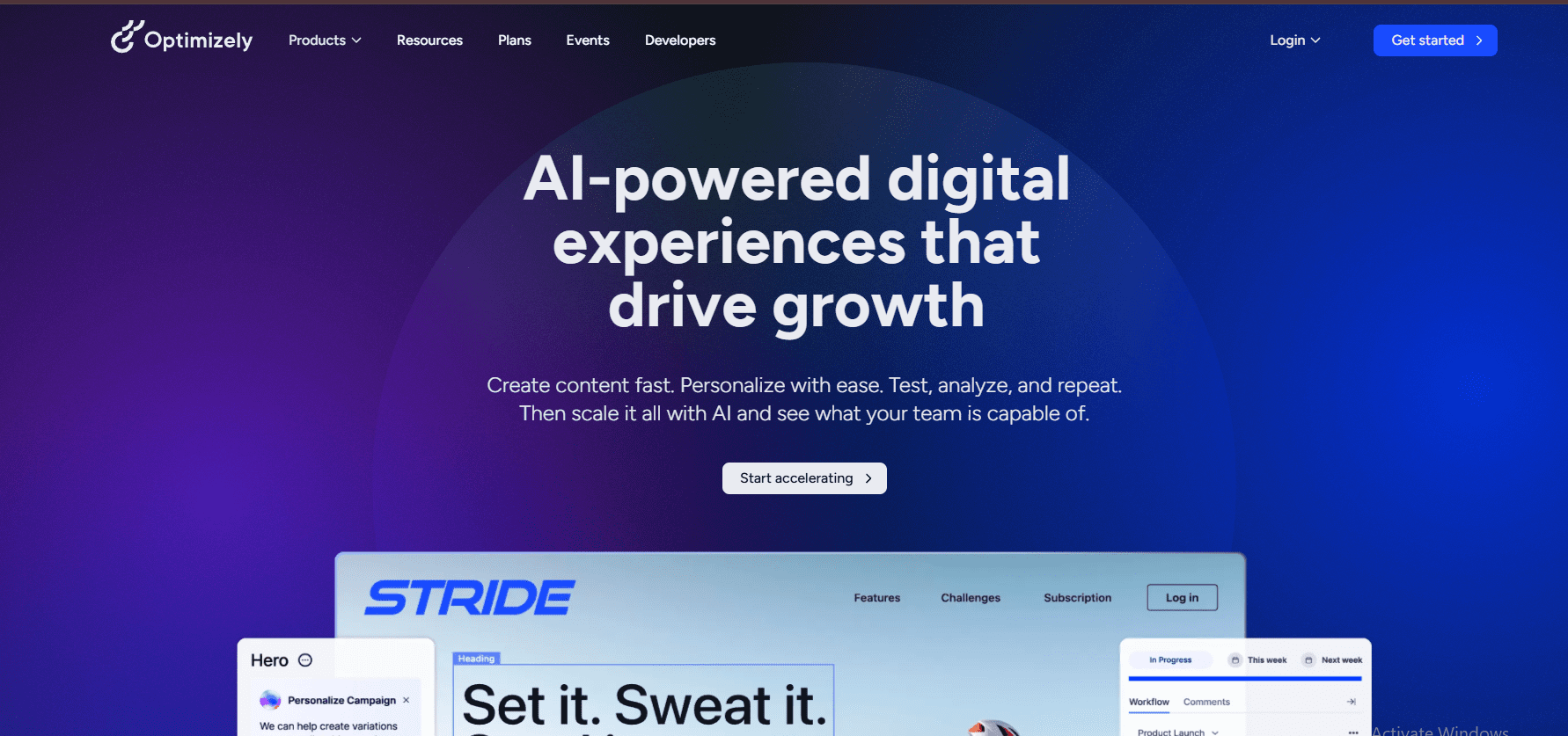
7. Optimizely: Data-Driven A/B Testing
Best for: Evidence-based website optimization and experimentation
Optimizely leads the experimentation space with sophisticated A/B and multivariate testing capabilities that eliminate guesswork from website changes.
Core Capabilities
AI-Powered Personalization enables advanced behavioral targeting and segmentation, allowing you to test variations with specific audiences and understand what resonates with different demographics.
Visual Editor requires no coding knowledge for basic tests, though development skills enable more sophisticated experiments and better long-term results.
Statistical Analysis provides confidence levels and significance testing, ensuring you make changes based on real data rather than assumptions.
Integration Advantages
Partners with platforms like Contentsquare to visualize how users engage with different test variations, providing deeper behavioral context beyond conversion metrics.
Pricing
Optimizely doesn’t publicly share detailed pricing but offers custom enterprise plans. Contact their sales team for quotes based on your traffic and testing needs.
Website: optimizely.com
8. Crazy Egg: Visual Optimization Tools
Best for: Marketers and developers focusing on conversion optimization
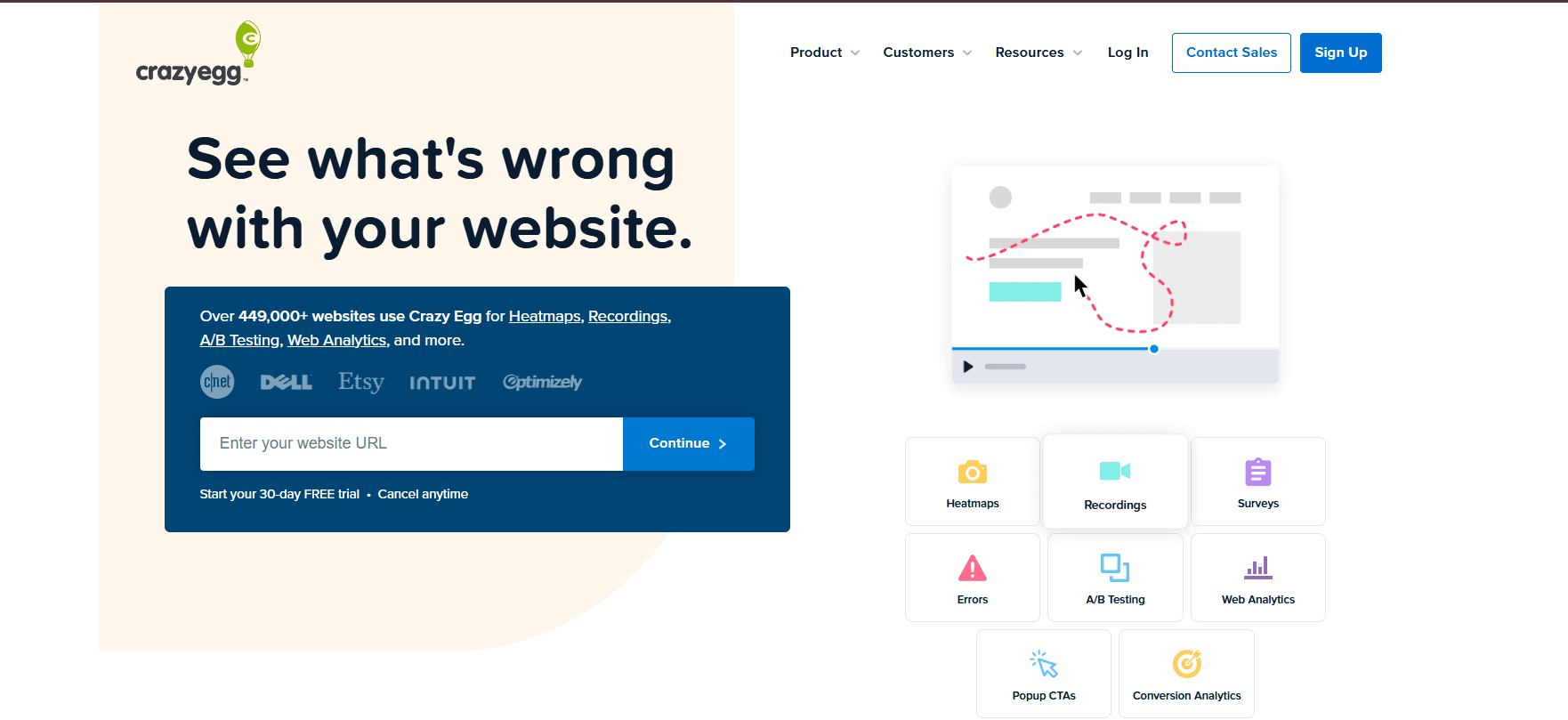
Crazy Egg provides intuitive visual tools that make user behavior data accessible to non-technical team members.
Visual Analytics Suite
Heatmaps show where users click, scroll, and spend time, revealing which content drives engagement and which elements are ignored.
A/B Testing Capabilities let you experiment with different page versions to identify what works best for your audience.
User Recordings allow you to watch visitor navigation patterns, identifying friction points and optimization opportunities.
Conversion Tracking measures the impact of changes on your key metrics, from form completions to checkout success.
Accessibility
Offers straightforward pricing plans suitable for small to medium-sized businesses focused on conversion rate optimization.
Website: crazyegg.com
Emerging Trends in User Testing for 2026
AI-Driven Analysis
Machine learning algorithms are becoming better at predicting user behavior, while natural language processing improvements enable more nuanced analysis of user feedback. Expect real-time AI coaching during tests and predictive usability scoring before designs are even built.
Agentic AI Testing
Agentic AI happens when autonomous agents make decisions, plan actions, or solve problems independently with little to no human interaction. By 2028, 33% of enterprise software applications will include agentic AI, fundamentally changing how testing is conducted.
Multimodal AI Analysis
Multimodal AI can simultaneously process information from multiple data types like text, images, audio, and video, providing comprehensive understanding of user experiences across all interaction channels.
Figma-First Workflows
Design-to-research integration has become standard. Tools like UXArmy, Maze, and Useberry support importing interactive Figma prototypes that preserve navigation and clickable elements for realistic testing, reducing setup time by up to 60%.
How to Choose the Right Tool for Your Needs
Consider Your Research Methods
- Prototype testing only? → Maze, Useberry, or UXArmy
- Need both moderated and unmoderated? → UXArmy or Lookback
- Behavioral analytics focus? → Hotjar or Crazy Egg
- A/B testing priority? → Optimizely
- Enterprise scale with AI analysis? → UserTesting
Conclusion: User Testing Within Everyone's Reach
The democratization of user testing continues accelerating in 2025. AI-powered insights, flexible pricing models, and seamless design tool integrations have eliminated traditional barriers that once limited UX research to well-funded enterprises.
Whether you’re a solo founder validating a startup idea, a designer seeking feedback on prototypes, or a product team optimizing conversion funnels, there’s a powerful tool available at your budget level. The insights gained from even basic user testing often reveal surprising usability issues that, once addressed, significantly improve engagement, satisfaction, and revenue.
The question is no longer whether you can afford user testing—it’s whether you can afford not to test.
Ready to transform your user experience?
Choose a tool from this guide and conduct your first test this week. Your users will reward you with better engagement and higher conversion rates.