I’ll be honest with you—after three and a half decades in marketing, I’ve seen businesses rise and fall based on one simple thing: what their customers say about them.
Today, that conversation happens primarily on Google Reviews Prompts.
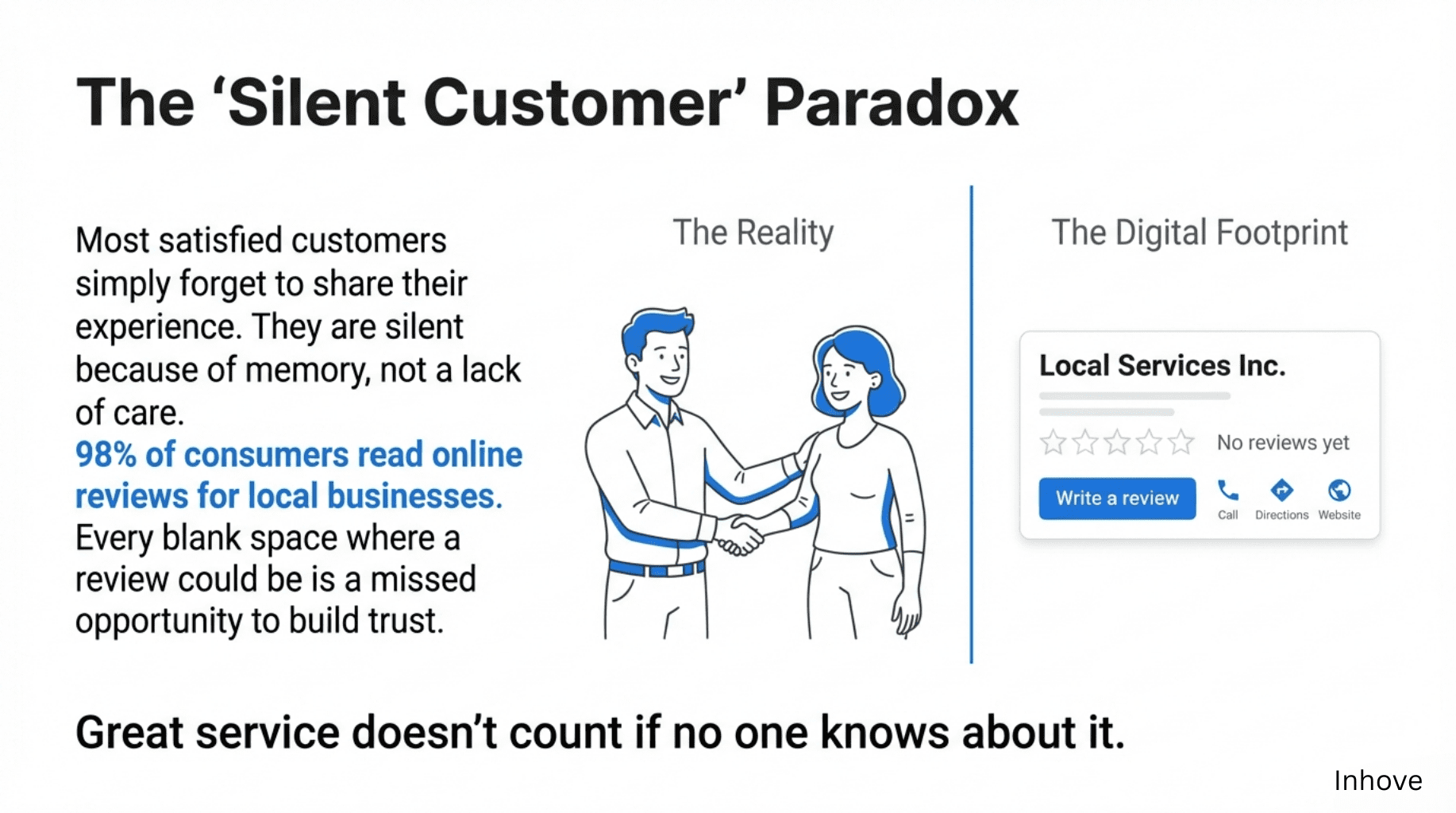
And here’s what nobody tells you: most of your happiest customers will never leave a review unless you make it incredibly easy for them.
That’s where feedback prompts come in. Think of them as gentle nudges that turn satisfied customers into vocal advocates. Let me walk you through exactly how to create prompts that actually work.
Why Google Reviews Matter More Than Ever
Look, I remember when word-of-mouth meant someone literally telling their neighbor about your business. Now? It means leaving a Google review that thousands of people will read before deciding whether to give you their money.
The statistics are staggering. About 87% of consumers read online reviews for local businesses, and Google reviews show up right when people search for what you offer. If you’re not actively collecting them, you’re essentially invisible to a huge chunk of your potential market.
But here’s the thing that surprised even me: it’s not just about having reviews. It’s about having recent reviews. Google’s algorithm loves fresh content, and so do customers. A business with ten reviews from last month looks more active than one with fifty reviews from three years ago.
Understanding What Makes a Great Feedback Prompt
After helping hundreds of businesses improve their review collection, I’ve noticed patterns. The Google review prompts that actually get results share some common DNA.
First, they’re personal. Nobody wants to feel like response number 247 in your automated system. When you ask for a review, it should feel like you’re asking a favor from someone you genuinely care about—because you should be.
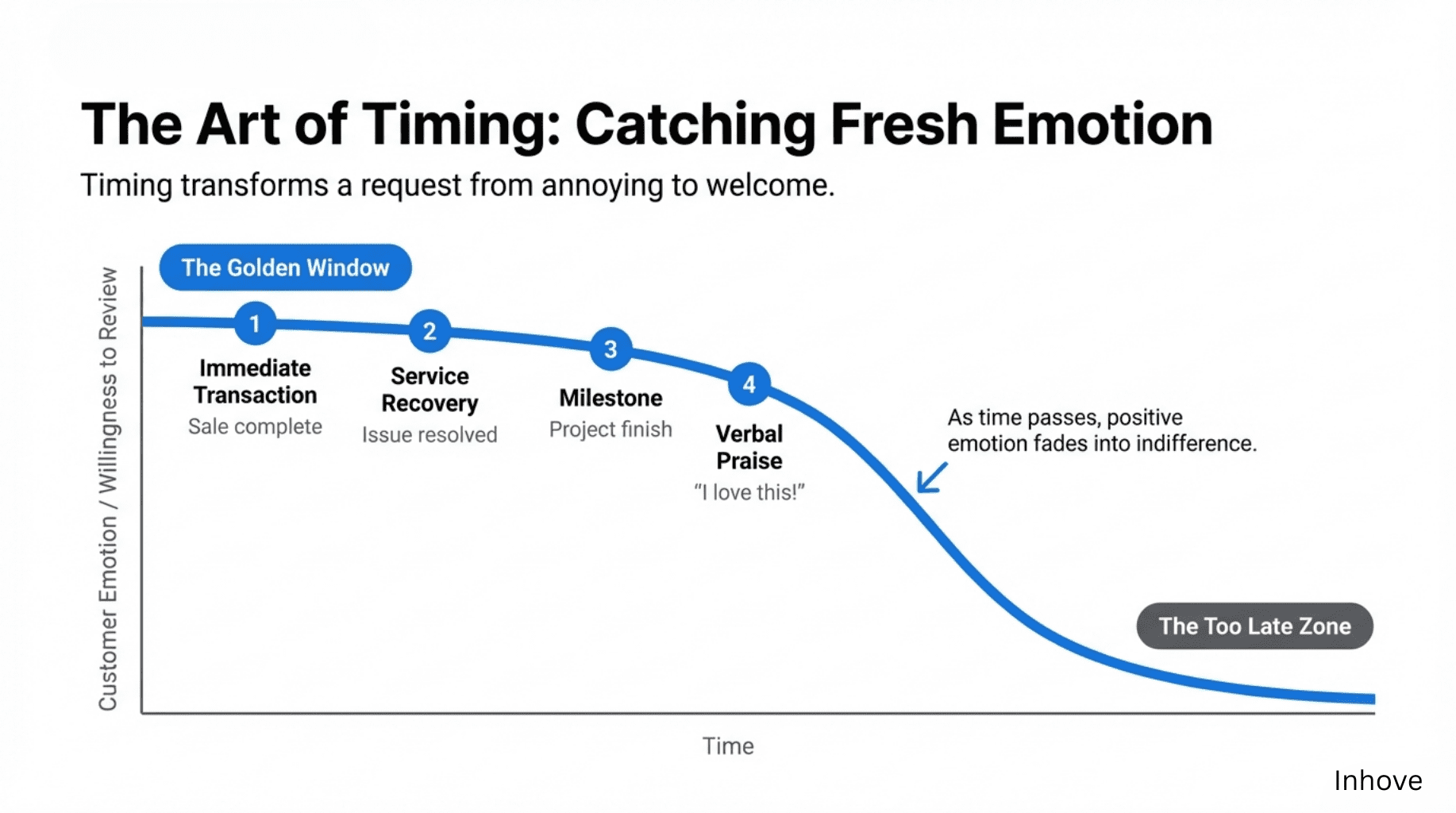
Second, they’re timely. There’s a golden window right after a positive experience when customers are most willing to share. Miss that window, and you’re fighting an uphill battle against forgetfulness and inertia.
Third, and this is crucial: they make the process dead simple. Every extra step between your request and a published review is a place where you’ll lose people. I’ve seen businesses increase their review rate by 300% just by removing friction from the process.
Crafting Your Feedback Prompt: The Framework
Let me give you a framework I’ve refined over the years. It works whether you’re sending an email, a text message, or asking in person.
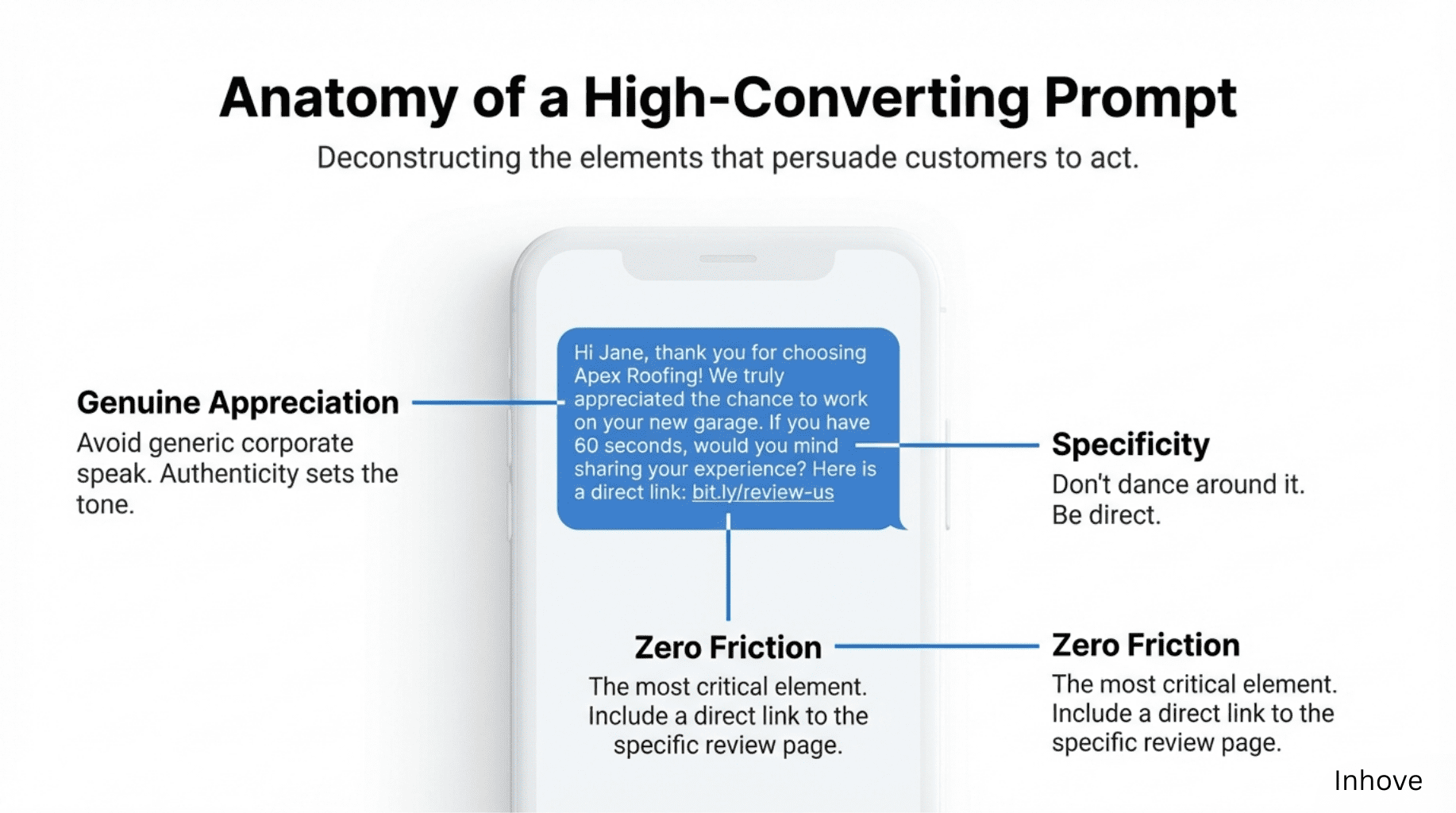
Start with gratitude. Thank them for their business first. This isn’t manipulation; it’s basic human decency. Something like: “Thank you for choosing us for your recent project. It was genuinely a pleasure working with you.”
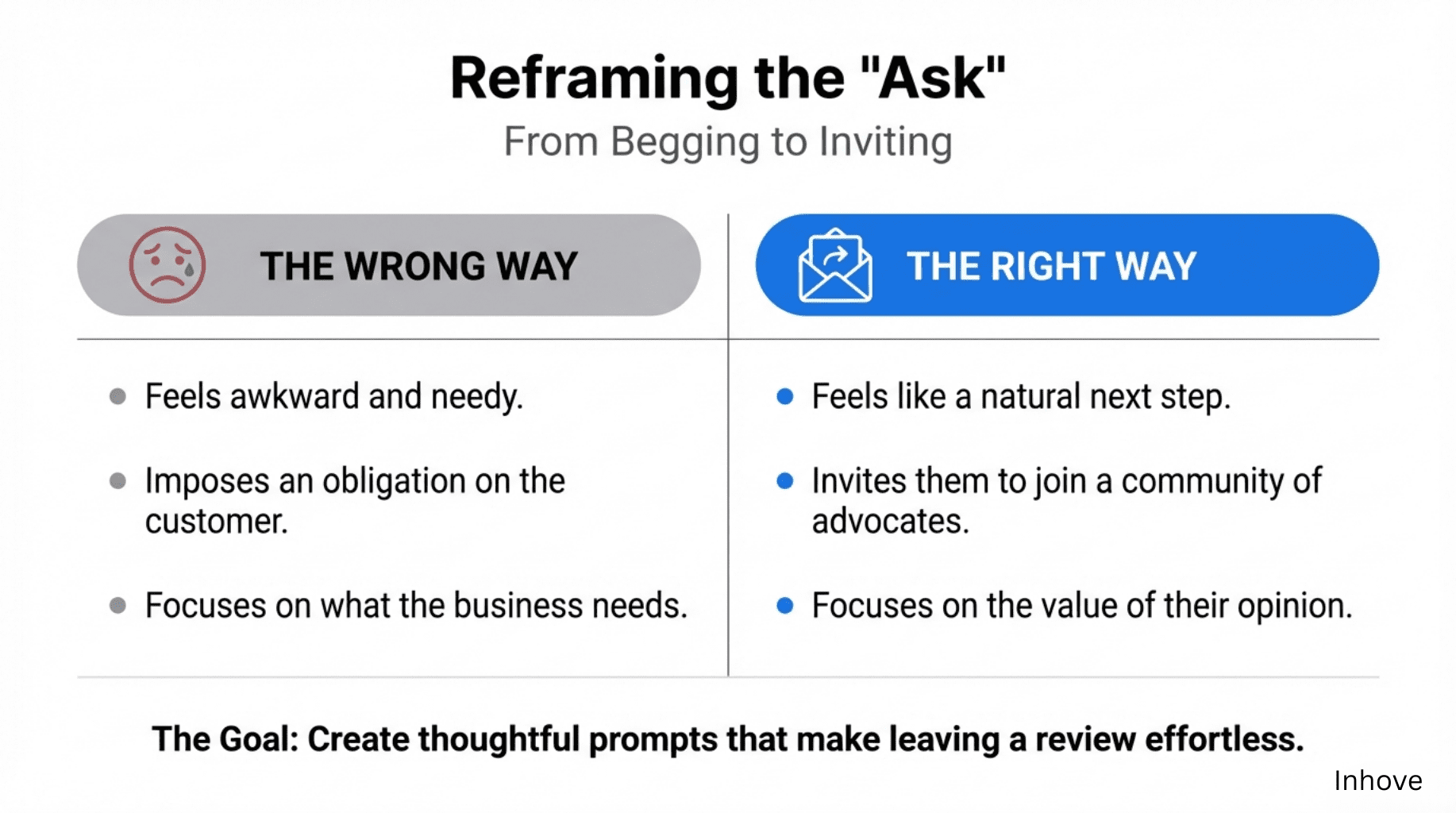
Make it about them, not you. Instead of “We need reviews to grow our business,” try “Your experience and insights could really help other customers make the right decision.” People like feeling helpful more than they like helping corporations grow.
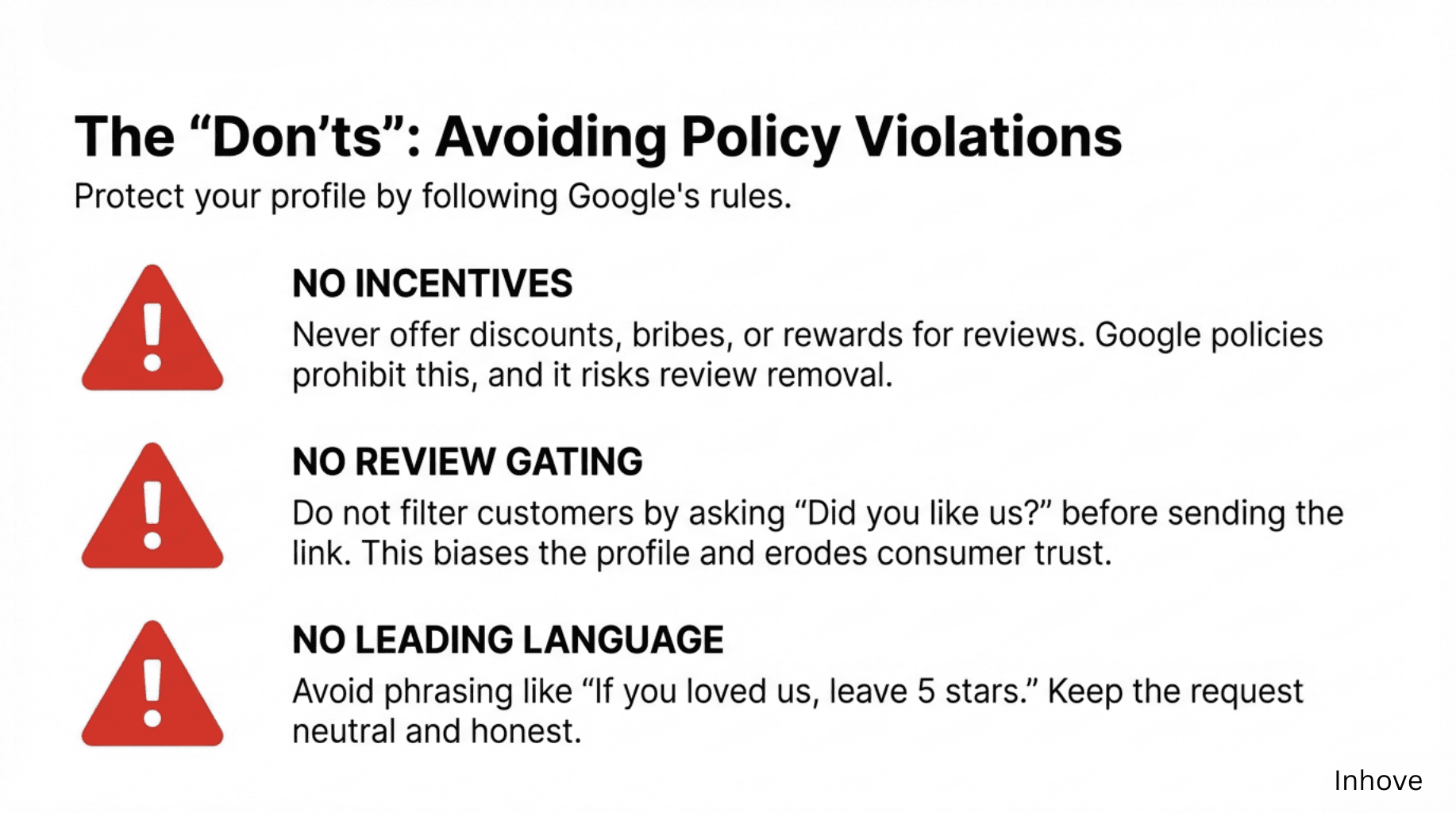
Be specific about what you’re asking for. Don’t hint around it. “If you have a moment, would you mind sharing your experience in a Google review?” is clear and respectful.
Make it ridiculously easy. Provide a direct link. I cannot stress this enough. Every extra click is a customer you lose. Google has a specific URL structure for review links—use it.
Different Prompts for Different Situations
Over the years, I’ve learned that one size definitely doesn’t fit all. Here are approaches that work for different scenarios:
For the in-person ask: This is still my favorite. When someone expresses satisfaction face-to-face, that’s your moment. “I’m so glad you’re happy with the results! Would you feel comfortable sharing that in a Google review? I can text you a link right now that takes you straight there.” Then actually send it while they’re standing there.
For the follow-up email: Send this 2-3 days after the transaction. Subject line matters here—skip the corporate speak. Try “Quick question about your recent experience” or “Would love your thoughts.” In the body, keep it conversational, express genuine thanks, make your ask, provide the link, and sign off warmly.
For the text message: This works brilliantly for service businesses. “Hi Sarah! Thanks again for trusting us with your car this week. If you were happy with the service, would you mind leaving us a quick Google review? Here’s the link: [URL]. Takes just a minute. Thanks! – Mike”
For the receipt or invoice: Sometimes the old-school approach wins. A simple note at the bottom: “Loved working with you! Share your experience: [short URL]” with a QR code works wonders, especially with younger customers.
Timing: When to Ask for Reviews
Timing isn’t just important—it’s everything. I’ve tracked this obsessively, and here’s what the data shows:
Ask too soon, and customers haven’t fully experienced what you offered. Ask too late, and they’ve moved on mentally. The sweet spot? It depends on your business.
For restaurants or retail, ask within 24 hours. The experience is immediate and emotional. For services like home repair or B2B consulting, wait 2-5 days so they can see the results. For larger purchases or projects, wait until they’ve had time to use what they bought but not so long that the excitement has faded—usually about a week.
I learned this the hard way with a client who sold pool installations. We were asking for reviews the day after installation. Nobody had even swum in their pool yet! We shifted to three weeks post-installation and the review rate jumped 40%.
The Language That Works (And What to Avoid)
Words matter enormously. Here’s what I’ve learned works:
Use “would you mind” instead of “please.” It’s psychologically different—it acknowledges you’re asking them to do something for you.
Say “share your experience” rather than “write a review.” Reviews sound like work. Sharing experiences sounds like conversation.
Include phrases like “if you have a moment” or “when you get a chance.” It reduces pressure and shows respect for their time.
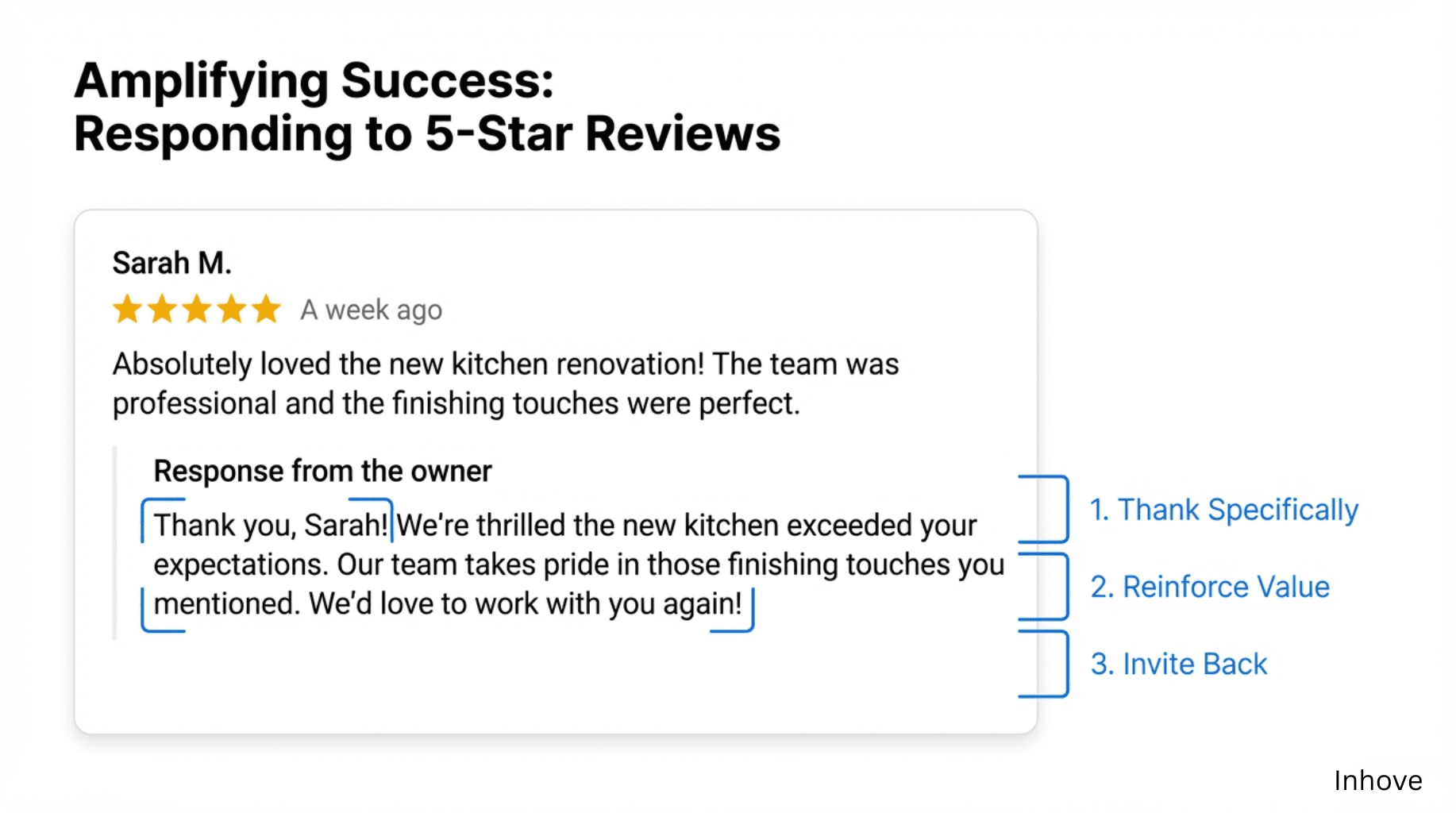
Now, what doesn’t work: Anything that sounds like you copied it from a corporate template. Begging. Offering incentives in exchange for reviews (that’s actually against Google’s policies and can get you in serious trouble). Being vague or indirect. Making promises about what the review will do for your business—customers don’t care about your growth metrics.
Creating a Direct Link to Your Google Review Page
This is technical but crucial. You need to create a direct link that takes customers straight to the review writing interface for your business.
Go to your Google Business Profile, find your place ID, and use Google’s review link generator. The resulting URL will be long and ugly, so use a link shortener to make it cleaner. I typically create something like “yourcompany.com/review” that redirects to the Google link.
Test it yourself from a mobile device before sending it to customers. Nothing kills momentum like a broken link.
Following Up (Without Being Annoying)
Here’s a delicate balance I’ve had to master: persistence versus pestering.
One follow-up is fine if they don’t respond to your initial request. Send it about a week later with slightly different wording: “Hi again! I know you’re busy, but if you get a chance, that review would mean the world to us. No pressure though—thanks either way!”
Two follow-ups? You’re pushing it. Three? You’re annoying them and potentially damaging the relationship.
I had a dentist client who automated three review request emails. His review rate did increase, but so did his patient complaints. We dialed it back to one email and one optional text message, and everyone was happier.
What to Do When You Get a Review (Good or Bad)
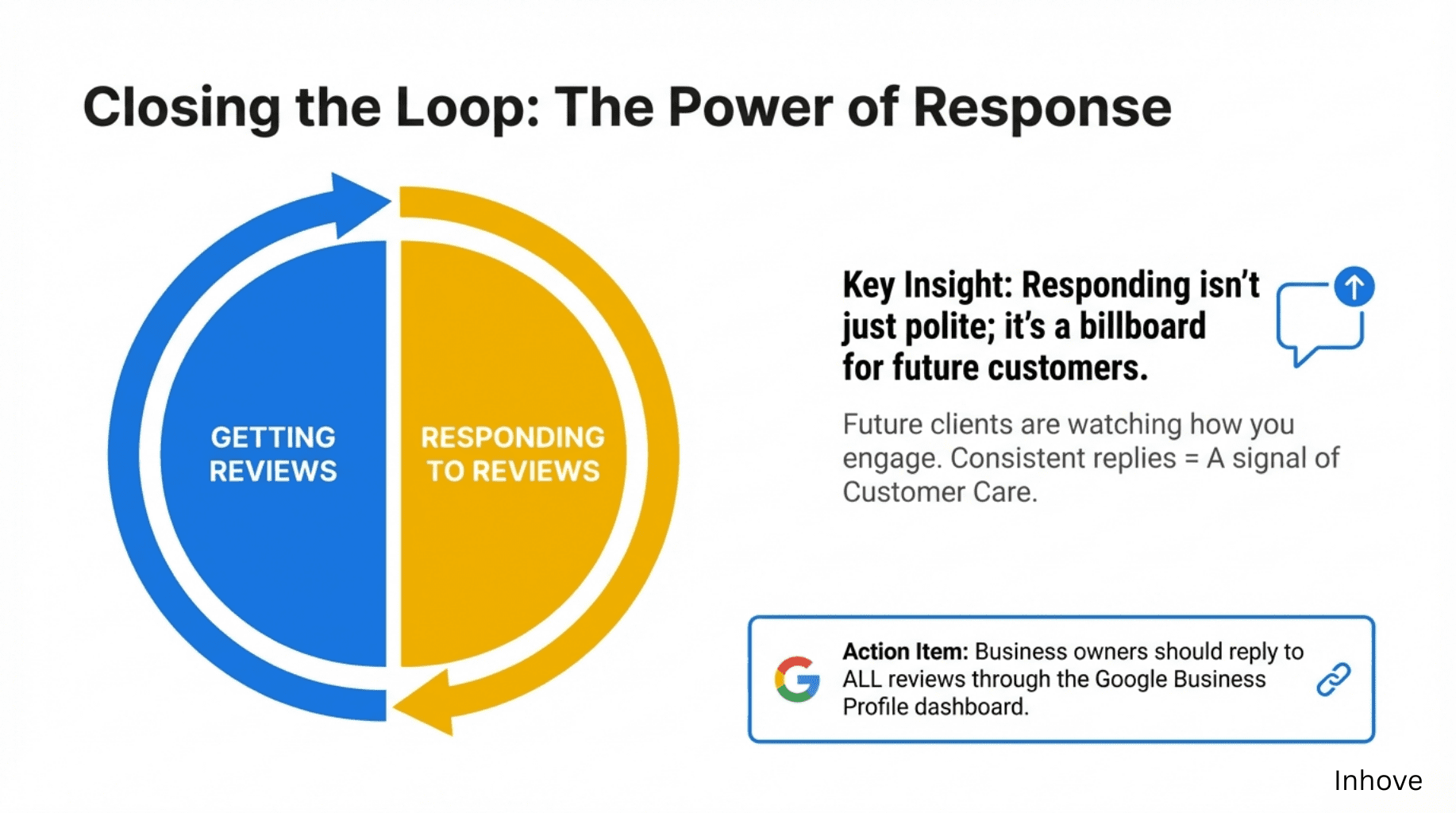
Getting the review is only half the battle. How you respond determines whether this becomes a one-time thing or the start of an ongoing conversation.
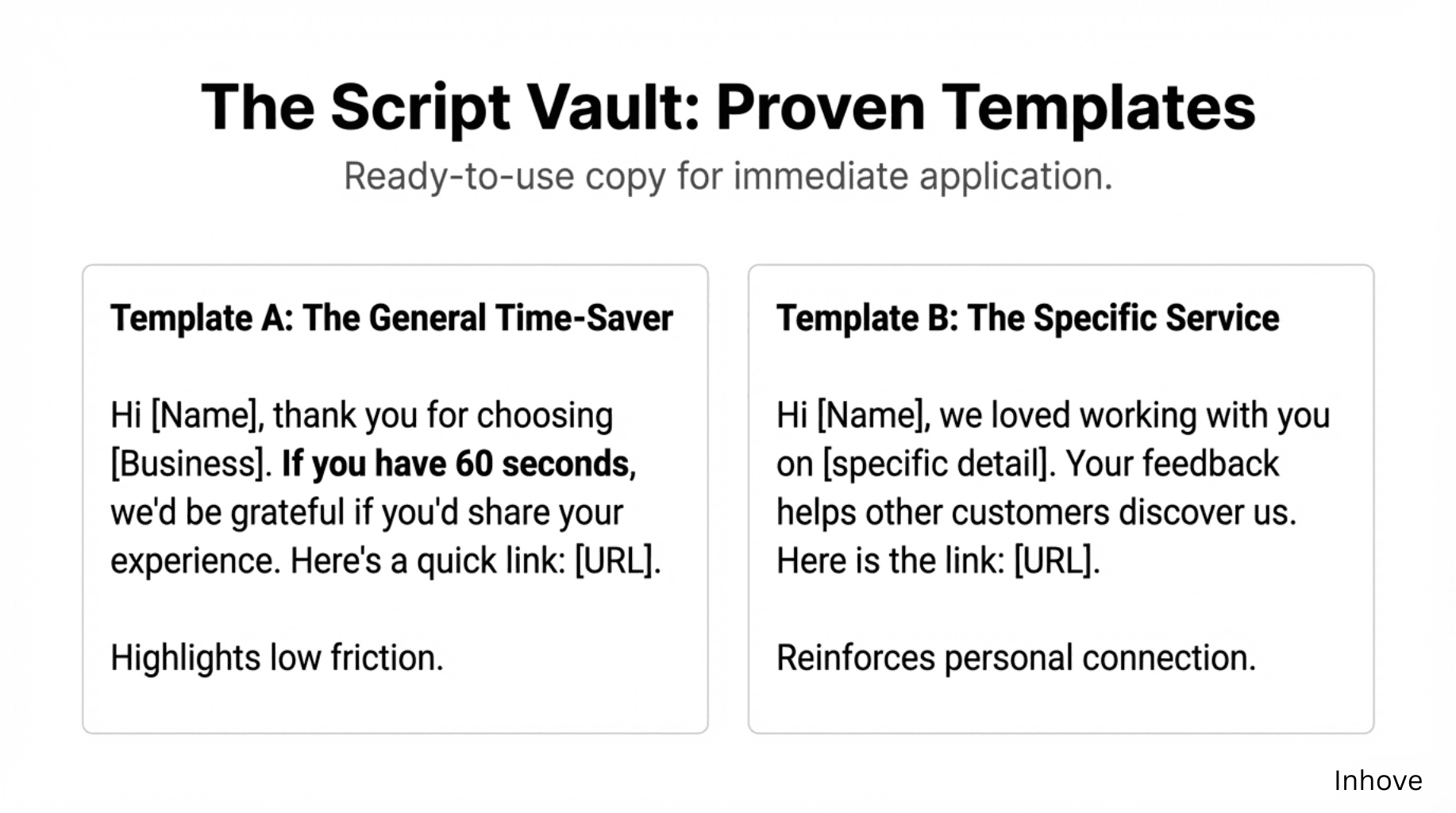
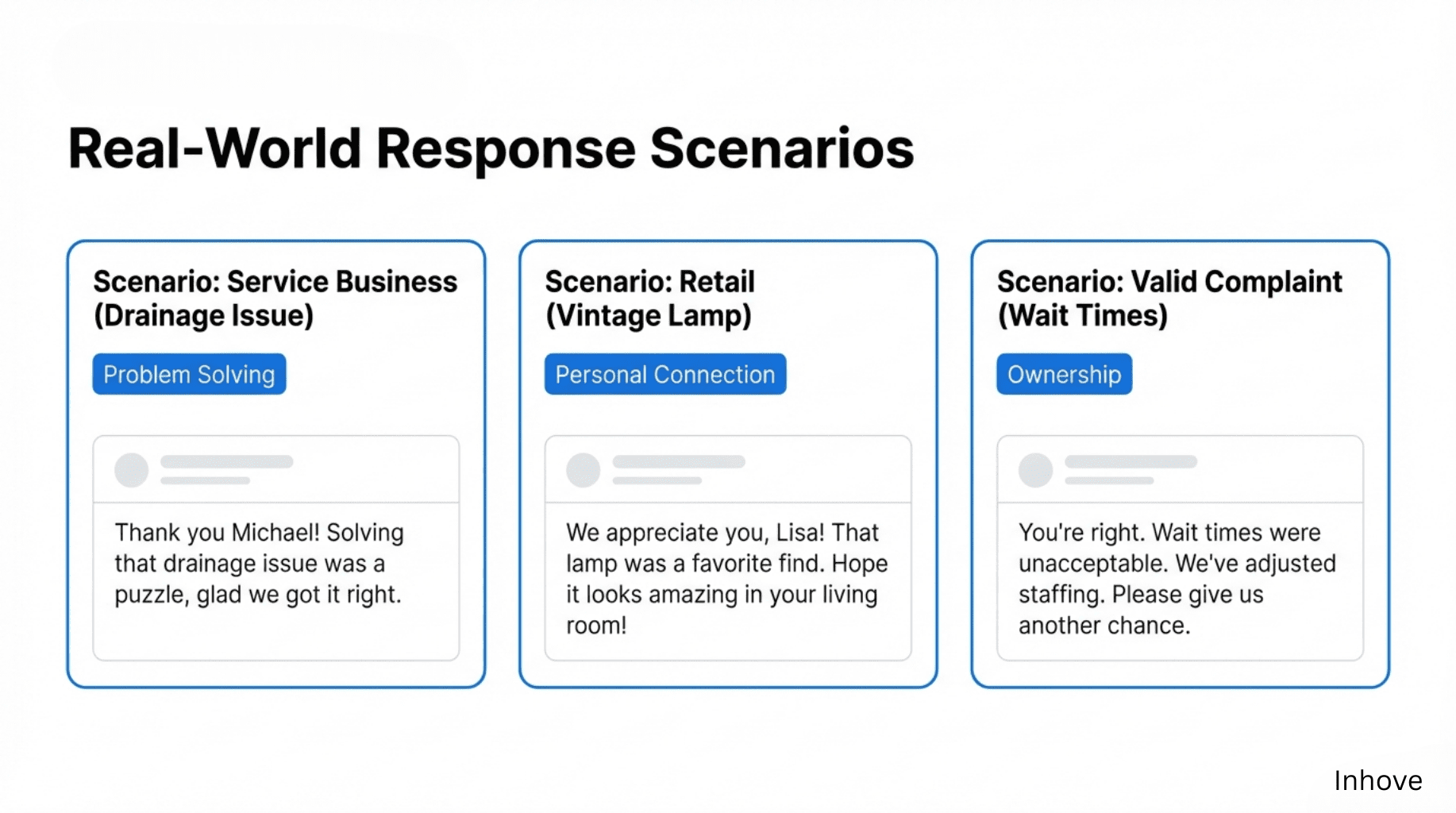
For positive reviews, respond within 24-48 hours. Thank them by name. Reference something specific they mentioned. Keep it genuine and brief.
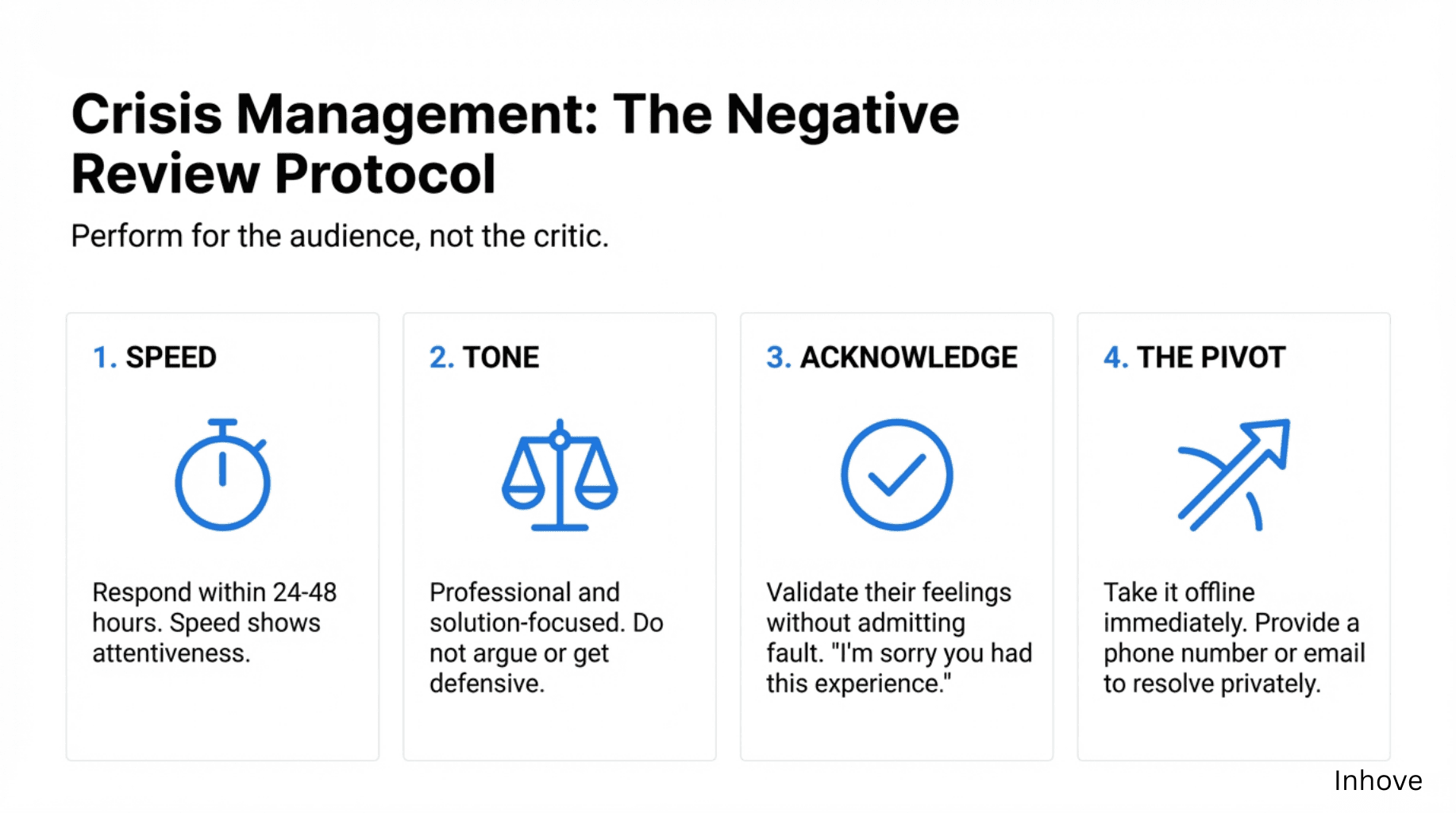
For negative reviews, respond even faster. Stay calm and professional no matter how unfair the review seems. Apologize for their experience, offer to make it right, and take the conversation offline. I’ve seen businesses turn their biggest critics into advocates by handling negative reviews with grace.
Making It Systematic Without Losing the Personal Touch
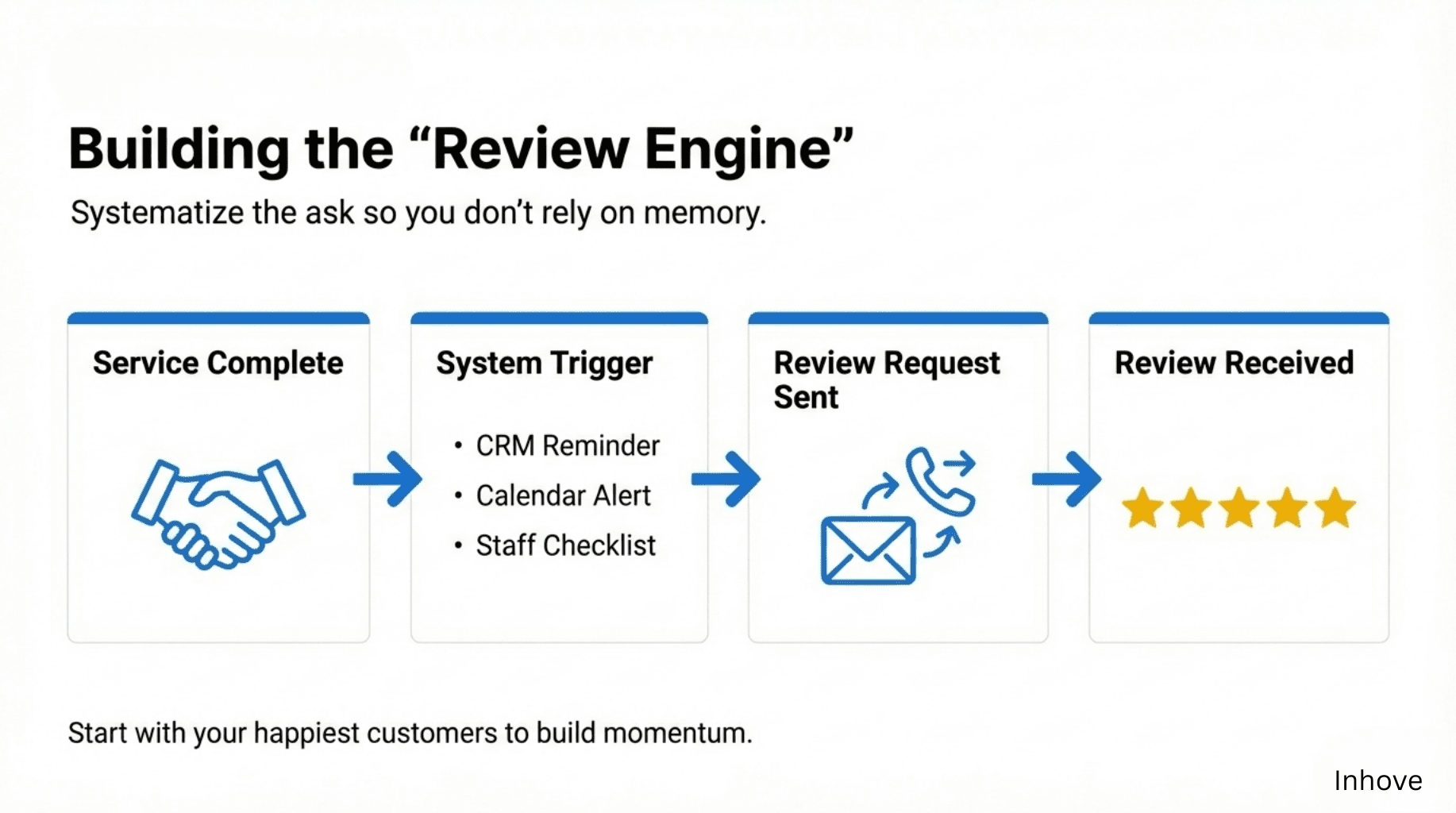
The businesses that consistently collect reviews have systems, but the best systems still feel human.
Set up automated reminders for yourself to ask for reviews, but personalize each request. Use templates as starting points, not final products. Train every team member on how to ask for reviews naturally. Make it part of your company culture, not a chore.
I worked with a small bakery that trained their counter staff to say, “If you love it, tell Google. If you don’t, tell us.” Simple, memorable, and it worked beautifully.
Common Mistakes I've Seen (So You Can Avoid Them)
After all these years, I still see businesses making the same errors. Don’t offer discounts or incentives for reviews—it violates Google’s policies and cheapens the authenticity. Don’t write fake reviews or ask friends who weren’t customers to review you. Don’t only ask your happiest customers—you want a range of perspectives. Don’t ignore reviews once you get them. And definitely don’t argue with reviewers publicly.
I once watched a restaurant owner get into a public argument with a reviewer about whether their steak was actually overcooked. Spoiler: even if you win the argument, you lose.
Measuring Success and Adjusting Your Approach
Track your review rate monthly. Calculate what percentage of customers leave reviews. Monitor which prompts get the best response rates. Look at the quality of reviews you’re getting, not just the quantity.
If something isn’t working, change it. Marketing isn’t static, and what worked five years ago might not work today.
The Real Secret Nobody Talks About
Here’s what I’ve learned after 35 years: the best way to get great reviews is to deserve them.
No prompt, no matter how well-crafted, will turn a mediocre experience into a five-star review. Focus first on delighting customers, then make it easy for them to share that delight.
The businesses I’ve seen succeed long-term don’t chase reviews. They create experiences worth reviewing, then gently remind happy customers that their voice matters.
That’s the real secret. Everything else is just logistics.
Start small. Pick one feedback prompt approach from this guide. Test it with your next ten customers. Refine based on what happens. Then build from there.
Your future customers are searching for you right now, reading reviews from people who haven’t even met you yet. What do you want those reviews to say?